
On 2 December 2024, a forest that had waited sixteen years for the paperwork finally got its due: Ratapani was notified as India's 57th tiger reserve — the 8th in Madhya Pradesh, and the newest tiger reserve in the country. Eleven days later, the first tourist safari rolled out of the Jhiri gate.
Most of India hasn't caught up yet. That is precisely why now is the time to go.
This guide covers everything a first-time visitor needs — gates, permits, fees, timings, wildlife, season — with figures from the MP Forest Department's official portal. Where numbers can change (and safari fees do), we say so.
What makes Ratapani different
Three facts set Ratapani apart from every other tiger reserve in India:
- It is the closest tiger reserve to any state capital. The forest begins on Bhopal's southern edge — the Jhiri gate is just 34 km from Bhopal railway station and 41 km from Raja Bhoj Airport. Kanha, Bandhavgarh and Pench are five-to-eight-hour drives from the nearest airport; Ratapani is under an hour.
- A UNESCO World Heritage Site sits inside it. The Bhimbetka rock shelters — prehistoric paintings going back tens of thousands of years — lie within the reserve, and Bhimbetka is literally one of its three safari gates. No other tiger reserve lets you pair a morning safari with 30,000-year-old rock art in the same forest.
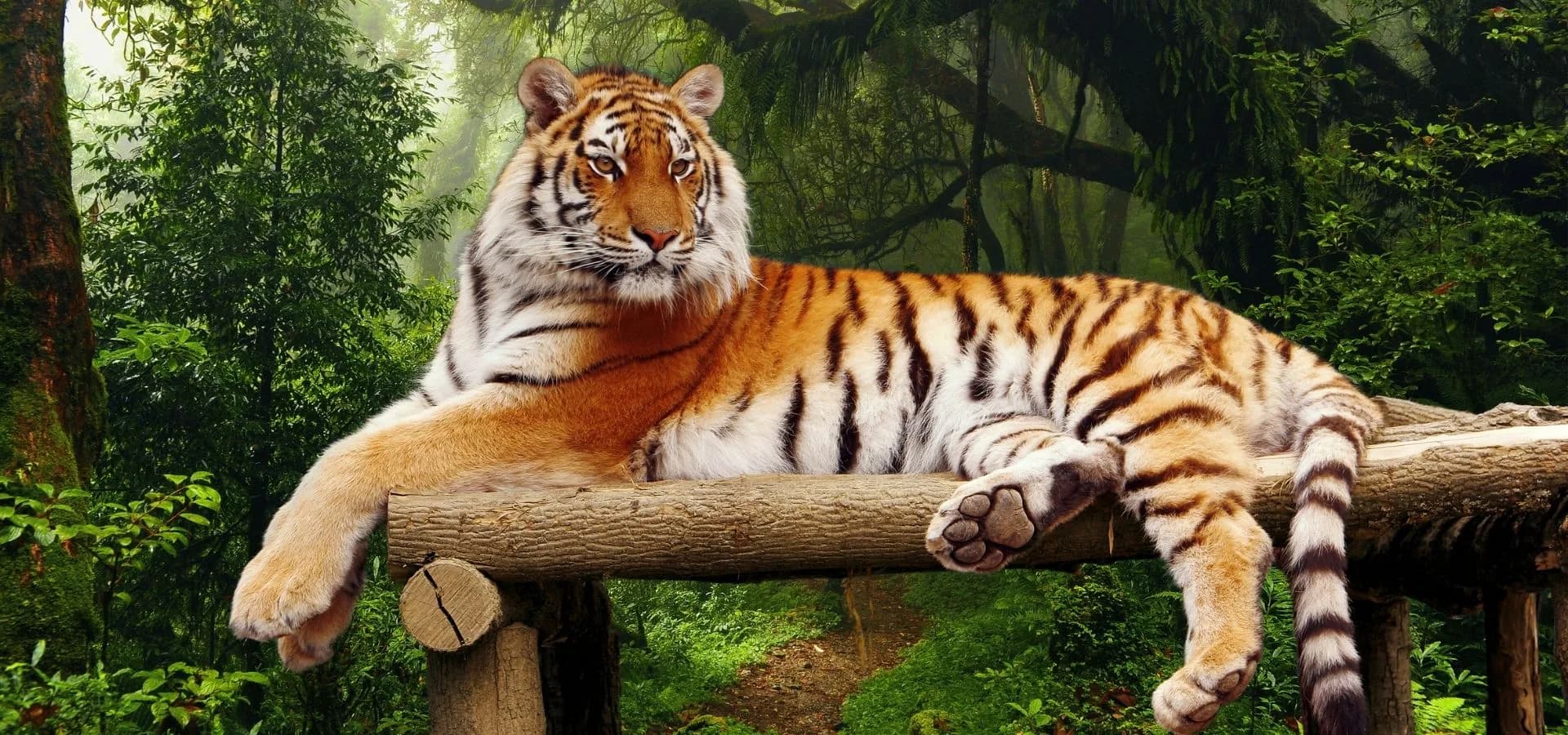
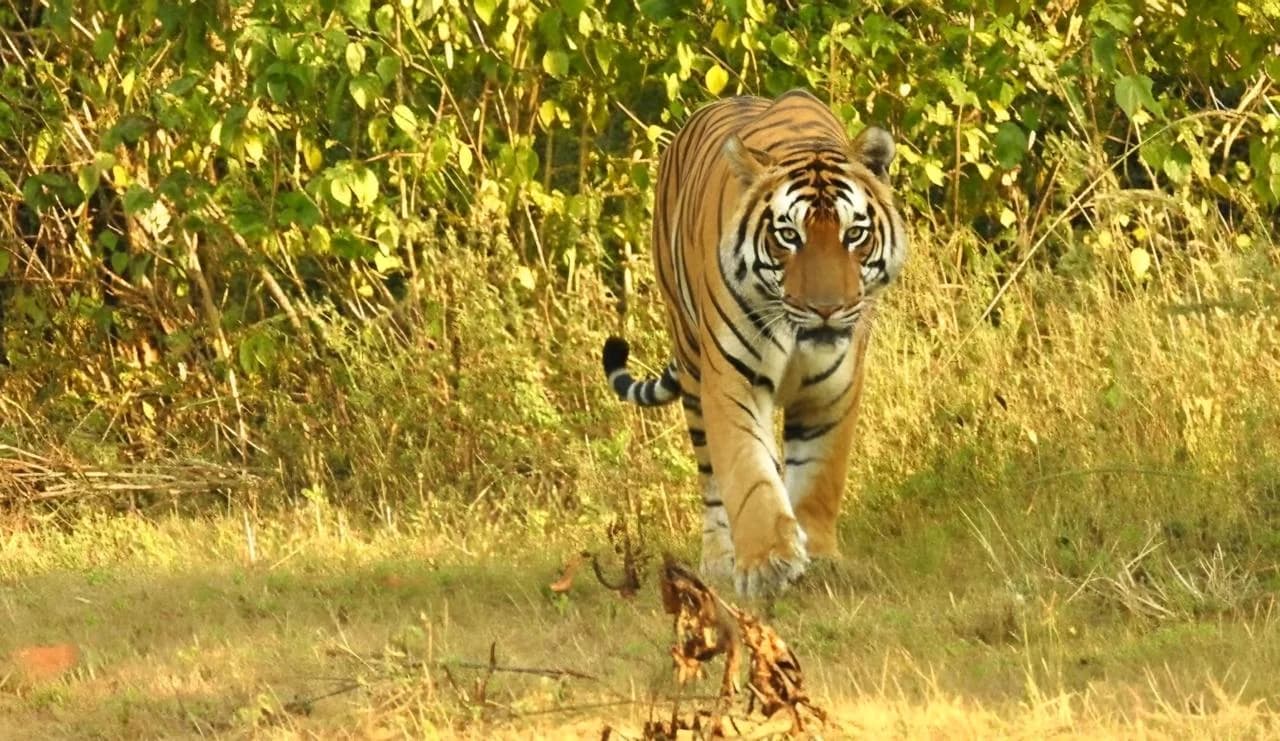
- The tigers were already here. This is not a restocked forest. Ratapani has been a wildlife sanctuary since 1976, and its roughly 90 tigers are a naturally breeding population — the reason Bhopal is popularly called the "Tiger Capital of India." (Wondering how it stacks up against the famous parks? See Ratapani vs Kanha vs Bandhavgarh.)
The reserve at a glance
| Notified | 2 December 2024 (India's 57th tiger reserve) |
| Total area | 1,271.5 km² — core 763.8 km², buffer 507.7 km² |
| Districts | Raisen and Sehore, immediately south of Bhopal |
| Forest | Dry and moist deciduous — roughly 55% teak, 25% bamboo |
| Tigers | ~90 (MP forest department estimate, Dec 2024) |
| Other mammals | Leopard, dhole, sloth bear, striped hyena, golden jackal, sambar, chital, nilgai, four-horned antelope |
| Birds | 150+ recorded species |
| Season | October to mid-June; closed for the monsoon |
The three gates
Ratapani has three entry points, and they suit different plans:
| Gate | From Bhopal station | From the airport | Booking |
|---|---|---|---|
| Jhiri | 34 km | 41 km | Online + at gate; registered safari vehicles only |
| Bhimbetka | 44 km | 55 km | At the gate; private vehicles permitted |
| Delawadi | 52 km | 64 km | Online + at gate; registered safari vehicles only |
Jhiri is the primary safari gate — this is where the reserve's first safaris were flagged off, and where most full-jeep permits operate. Bhimbetka is the flexible one: you can arrive in your own car, and it pairs naturally with a visit to the rock shelters. Delawadi sits deeper south, near the forest rest-house country and the Ginnorgarh fort.
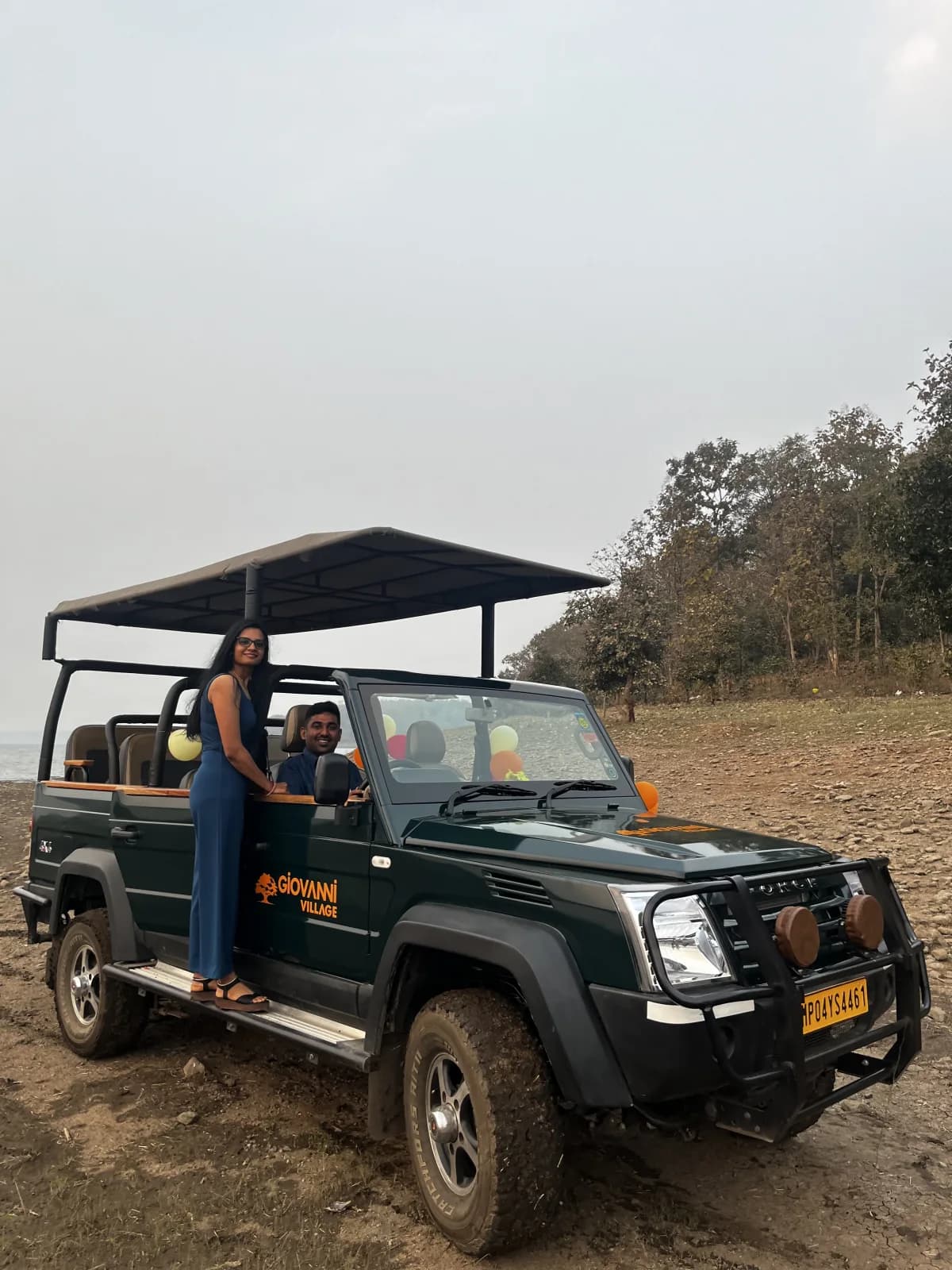
From Giovanni Village, on Bhopal's southern Kolar Road corridor, the buffer forest begins almost at once — and the safari gates are on our side of the city, which is exactly the geography you want for a 5:30 a.m. start.
Safari permits, timings and fees
Safaris run in morning and evening rounds at Jhiri and Delawadi. Permits are issued through the MP Forest Department's official portal, forest.mponline.gov.in, with a limited online quota per round (at Jhiri: two full-vehicle permits and one single-seat permit online per round, plus at-gate availability).
Official fees at the Jhiri gate, as published on the portal:
| Item | Fee |
|---|---|
| Full-vehicle entry permit | ₹750 |
| Registered gypsy (up to 6 guests) | ₹3,000 |
| Guide (mandatory) | ₹480 |
| Total per jeep | ≈ ₹4,230 |
| Single seat — adult / child | ₹125 / ₹65 + vehicle share |
Two caveats worth being honest about. First, fees and timings are revised by circular — verify current figures on the portal before you travel. Second, online quotas are small, so weekend permits genuinely run out. Resort guests skip this problem: our travel desk holds permits, a registered jeep and a resident naturalist against your booking, so the only thing you queue for is coffee.
For a fuller picture of how the morning actually unfolds — wake-up to gate to sighting to breakfast — read what a Ratapani safari morning really looks like.
What you'll see
Tigers headline the reserve, but treat a sighting as the bonus, not the contract. What Ratapani reliably gives you:
- Leopards and sloth bears along the rocky Vindhyan ridges — this is classic sloth-bear country.
- Dhole (Indian wild dog) — increasingly rare elsewhere, present here.
- Big herbivore numbers — sambar, chital, nilgai, wild boar and the shy four-horned antelope.
- 150+ bird species — eagles, vultures, kingfishers and winter migrants around the Ratapani dam and Barna reservoir backwaters.
A safari here is rarely about ticking off a tiger. It is about the hour, the light, and a forest that hasn't yet learned to perform for visitors.
Beyond the jeep: Bhimbetka and Ginnorgarh
Two detours inside the reserve deserve their own morning.
Bhimbetka (UNESCO World Heritage, 2003) is one of the oldest records of human life on the subcontinent — more than 750 rock shelters across seven hills, painted and repainted over tens of thousands of years. It stays open even when the safari zones close for monsoon. We've written a complete Bhimbetka visitor guide.
Ginnorgarh Fort, about 3 km from Delawadi, is the ruined hilltop stronghold of the Gond rulers — including Rani Kamlapati, the queen after whom Bhopal's showpiece railway station is named. Arrive at Rani Kamlapati station, safari past her fort: few destinations hand you a narrative that clean. The Gond are Ratapani's oldest keepers, and their plant knowledge still shapes the rituals at our Elysium spa.
When to go
The reserve is open from October to mid-June and closed through the monsoon. Winter (November–February) is the comfortable season; the dry heat of April–June concentrates wildlife at waterholes and produces the strongest sightings. We've broken the whole year down, month by month, in the best time to visit Ratapani.
Where to stay
Bhopal's city hotels put you 45–90 minutes of morning traffic from the gates. The alternative is to sleep on the forest's side of the city and let the estate do the logistics. We've compared the honest options — MPT jungle camps, city hotels, and a full resort — in where to stay near Ratapani.
Giovanni Village sits on 23 acres off Kolar Road with the buffer forest minutes away: forest-view suites with private plunge pools, three dining venues fed by our own organic farm, and a travel desk that treats safari permits as its problem, not yours.
Frequently asked questions
When did Ratapani become a tiger reserve? On 2 December 2024 — India's 57th, MP's 8th. First safaris were flagged off at Jhiri on 13 December 2024. The forest has been a sanctuary since 1976.
How many tigers does it hold? Around 90, per the MP forest department at notification — a naturally breeding population.
How do I book a safari? Via forest.mponline.gov.in, or let our travel desk arrange permit, jeep and naturalist with your room.
What does it cost? Roughly ₹4,230 per full jeep (up to six) at Jhiri; single seats from ₹125 per adult. Verify current fees on the portal.
Is it open in monsoon? No — closed roughly July to September. Bhimbetka and the estate stay open year-round.
Ready to see India's newest tiger reserve before the crowds find it? Browse the rooms or tell us your dates — we'll hold the jeep, the permit and the naturalist.