
Light pollution is the quietest thing a city takes from you. Most people who grew up in one have never actually seen the Milky Way — not once. The fix costs twenty minutes: south of Bhopal, past the last streetlight on Kolar Road, where the Ratapani forest begins and holds a wall of darkness against the city's glow, the sky that was always up there comes back.
We put a restaurant under it, and a working telescope on the roof.
How a telescope dinner works
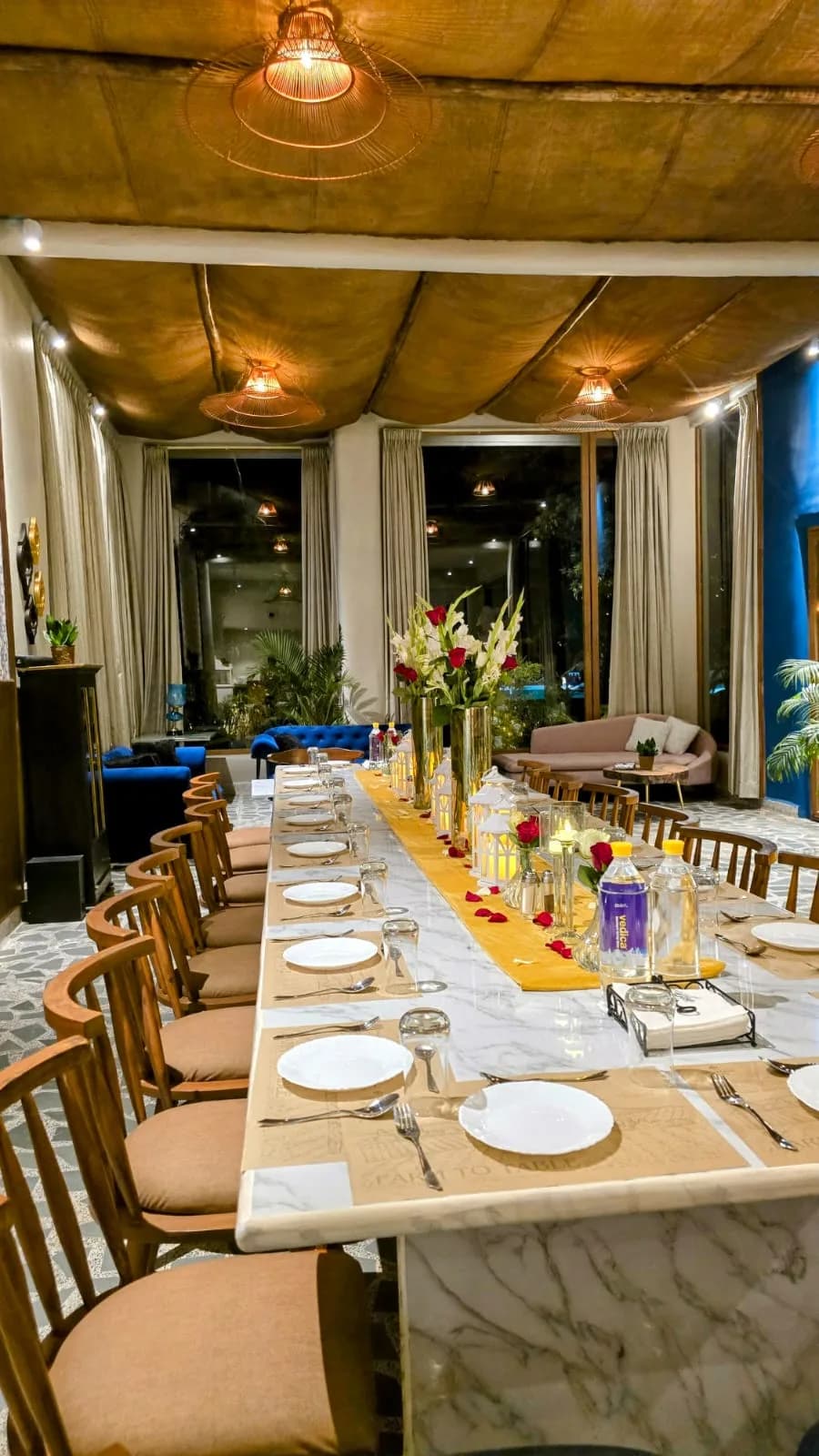
Pihu is the estate's rooftop restaurant — candle-lit, live music drifting up on weekends, a menu that runs from local to international. On weekend evenings, it does the thing no city restaurant can: between courses, the telescope comes out.
The pacing is deliberate. Saturn tends to arrive around the soup — there is a particular sound people make on first seeing the rings with their own eye, and it does not vary by age. Jupiter follows with its four Galilean moons strung out in a line that shifts visibly over the course of a dinner. The Moon, when it's up, shows its terminator — the sunset line where craters throw shadows a hundred kilometres long. Dessert usually belongs to the deep-sky objects: the Pleiades like spilled diamonds, the Orion Nebula's faint green smudge where stars are being born right now.
On moonless nights, the headline needs no telescope at all: the band of the Milky Way, naked-eye visible, arched over your table.
What's up, season by season
| Months | Sky conditions | The show |
|---|---|---|
| Oct–Nov | Post-monsoon, the year's clearest air | Saturn well-placed; Milky Way core sets early; crisp horizons |
| Dec–Feb | Cold, dry, superbly steady | Orion, the Pleiades, Sirius blazing; Jupiter season most years; bring a layer |
| Mar–May | Warm, hazier horizons | Planets stay bright overhead; spring galaxies for the patient |
| Jun–Sep | Monsoon — cloud roulette | When a gap opens, the washed air is spectacular; treat it as a bonus, not a plan |
The single biggest variable isn't season — it's the Moon. A full moon is beautiful and washes out everything else; a new-moon weekend is the connoisseur's booking. Ask the concierge to check the lunar calendar against your dates; we do it as a matter of course.
The astronomy of dinner theatre
Why does this work so well here? Geography, mostly. The estate sits with the forest to its south — 1,271 km² of tiger reserve with no towns inside it, which is 1,271 km² of no light. Bhopal's dome glows on the northern horizon and the forest simply refuses it. The rooftop adds the last few metres above the tree line, and the kitchen adds the reason to stay out for three hours, which is how long a sky needs to really open up as your eyes adapt.
Dinner under a sky like this is less a meal than a slow reminder of scale.
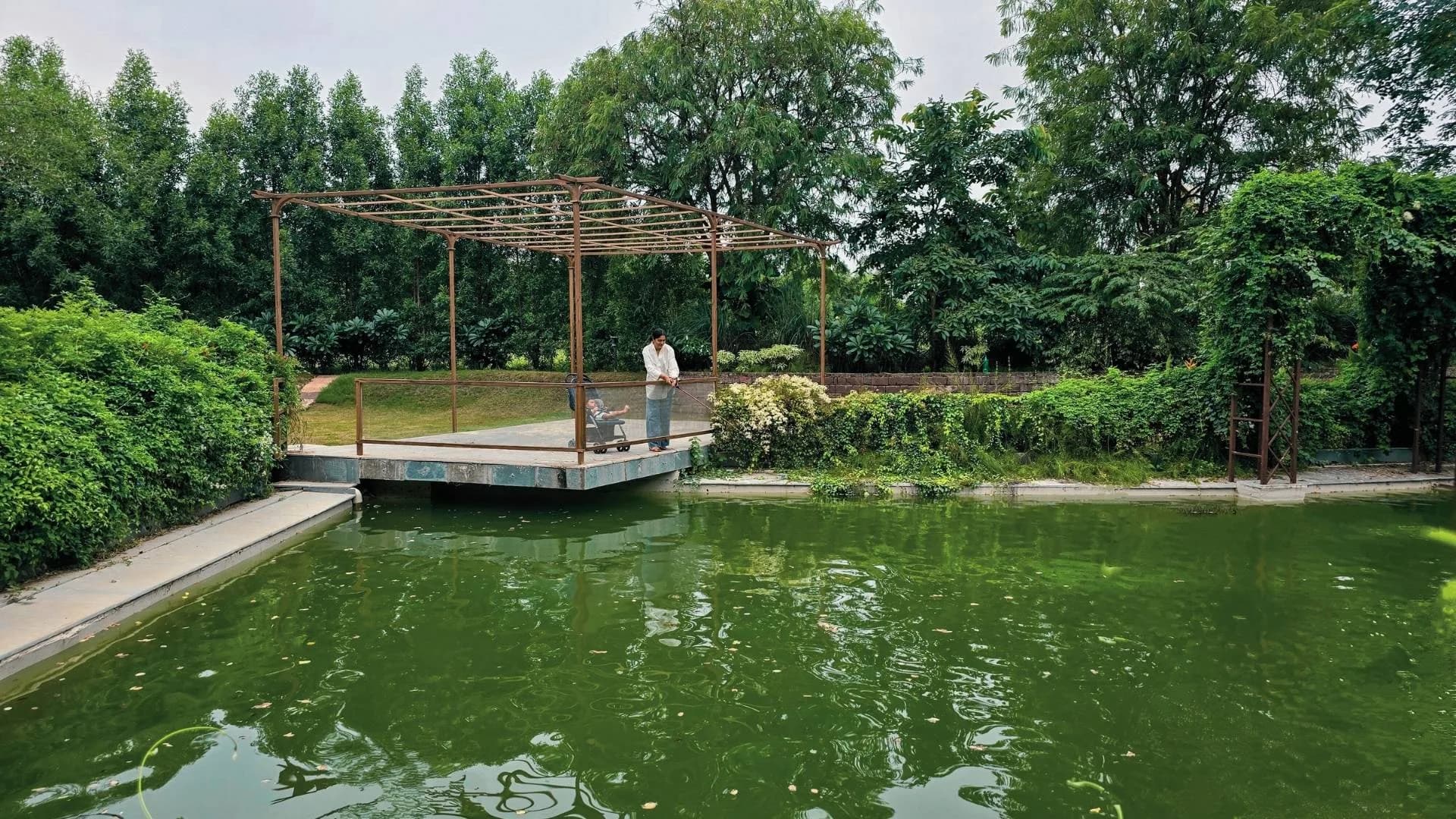
It has also become the estate's most reliable romantic conscription: more proposals happen at the telescope than at the lakeside gazebo, which was supposedly built for them.
Booking a clear night
Telescope evenings run on weekend nights and are worth pre-booking — the rooftop is intimate by design, and new-moon weekends in the October–March window go first. Tell the concierge your dates; we'll line up the table, the menu, and (weather permitting) a sky worth the climb. If you're building the full weekend around it, a dawn safari the next morning bookends the night sky with the forest waking under it — the same wilderness, both shifts.